Introduction
A lot of parents have heard of the Right to Education Act but assume it’s just about free schooling for poor kids — and honestly, that’s only part of the picture. The RTE Act guarantees a lot more than most people realize, and knowing what it actually covers can make a real difference if your child is ever denied admission, charged illegal fees, or subjected to something the school shouldn’t be doing in the first place.
Let’s go through what this law genuinely protects.
What the RTE Act Actually Is
Quick answer: The Right to Education Act, 2009, guarantees free and compulsory education to every child aged 6 to 14 in India, flowing from Article 21A of the Constitution, and applies to both government and private unaided schools.
It came into force on April 1, 2010, and honestly, it changed the legal landscape around education in a way that’s still playing out today, over a decade later.
Who Does It Cover?
Every child between 6 and 14 years — that’s roughly Class 1 to Class 8 — is entitled to free and compulsory elementary education. This includes children with disabilities, who are entitled to education in an inclusive environment as far as possible.
The 25% Reservation for Private Schools
This is probably the most talked-about (and most misunderstood) provision. Under Section 12(1)(c), all private unaided schools must reserve 25% of seats at the entry level for children from economically weaker sections (EWS) and disadvantaged groups, and the state reimburses the school for this.
I’ve noticed a lot of parents don’t know this applies even to expensive private schools, not just budget ones. If you qualify under the income criteria (which varies by state), you can apply for this quota.
No Detention Policy — And Its Recent Changes
Originally, the RTE Act had a “no detention” policy up to Class 8, meaning children couldn’t be failed or held back. This was amended in 2019, allowing states to conduct exams in Classes 5 and 8, and hold back students who fail after being given a chance for re-examination. Several states, including Rajasthan, have adopted this amendment.
[link to related guide on legal rights of students here]
No Capitation Fee or Screening
Schools cannot charge capitation fees (a lump sum “donation” disguised as an admission cost) or subject children to any screening procedure or interview for admission — this applies to both the child and the parents. Violating this can attract a fine up to ten times the capitation fee charged, under Section 13.
No Expulsion or Board Exam Before Class 8
A child cannot be expelled or held back, and no child can be required to pass a board examination until the completion of elementary education. This provision exists to protect children from premature academic pressure and dropout risk.
Right Against Physical Punishment
Section 17 of the RTE Act explicitly prohibits physical punishment and mental harassment of children. This isn’t a vague guideline — it’s a legal prohibition, and schools found violating it can face disciplinary and even criminal action under separate child protection laws.
Neighbourhood Schools
The Act mandates the establishment of a school within a specified distance of every neighbourhood — generally within 1 km for primary and 3 km for upper primary — so that access to education isn’t a geographic barrier.
A Real-World Example
A family in Jaipur, falling under the EWS category, applied for their daughter’s admission into Class 1 at a well-known private school under the 25% RTE quota. The school initially delayed processing the application, claiming the quota was already filled. The parents escalated the matter to the District Education Officer, citing their RTE entitlement, and the child was eventually admitted after the school’s claim was found inaccurate upon verification. Knowing the actual provisions of the law made the real difference here.
[link to related article on legal documents needed for school admission here]
What Parents Can Do If Rights Are Violated
- File a written complaint with the school management first
- Escalate to the Block/District Education Officer if unresolved
- Approach the State Commission for Protection of Child Rights (SCPCR)
- In serious cases, approach the High Court through a writ petition
FAQs
Does the RTE Act apply to private unaided schools? Yes, it applies to all schools except minority institutions, which are exempt under certain constitutional provisions.
Is the RTE quota only for extremely poor families? It covers economically weaker sections and disadvantaged groups, with income and category criteria varying by state — it’s broader than just families below the poverty line.
Can a school reject an RTE quota application without reason? No, if a child meets the eligibility criteria, the school cannot arbitrarily reject the application, and doing so can be challenged.
Does RTE cover education beyond Class 8? No, the RTE Act specifically covers elementary education for children aged 6-14; secondary education isn’t covered under this particular Act.
What is the penalty for charging capitation fees? Under Section 13, the penalty can go up to ten times the capitation fee amount charged.
Conclusion
The Right to Education Act covers a lot more ground than “free school for poor kids” — it touches admission fairness, punishment protections, and access to quality private education through the EWS quota. If you’re a parent and something about your child’s school experience feels off, it’s worth checking whether the RTE Act actually gives you a remedy. More often than not, it does.
Suggested Image Alt Text:
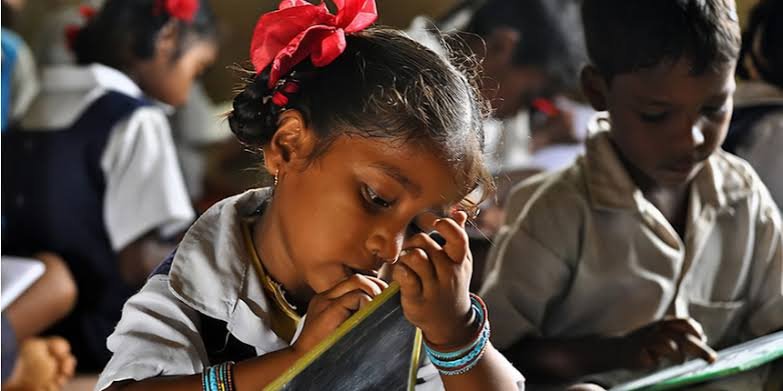
- “Children studying under Right to Education Act in India”
- “Parent submitting RTE admission application at school”
- “Classroom scene representing free education guarantee”